If you don't see your question here or are interested in more information - give us a call (970-259-5606). We'd love to hear from you.
What size solar ARRAY do I need?
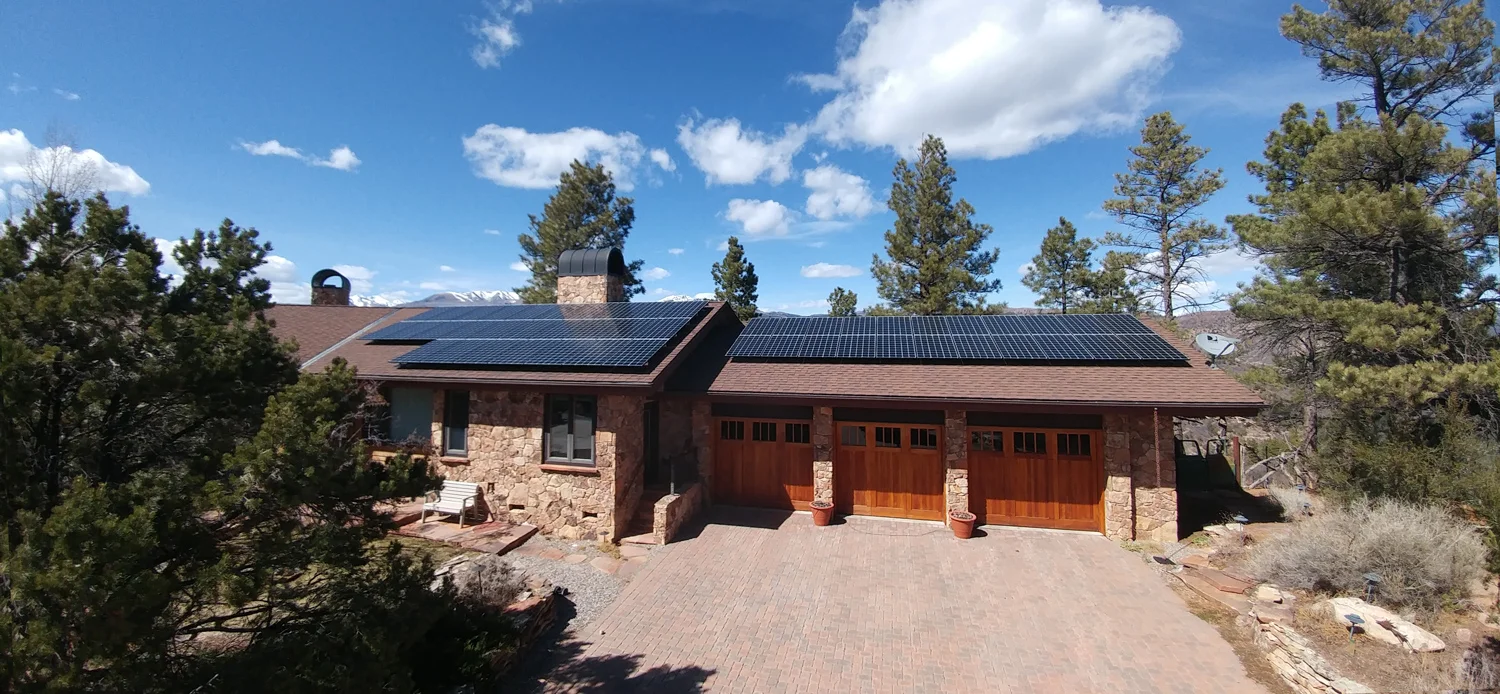
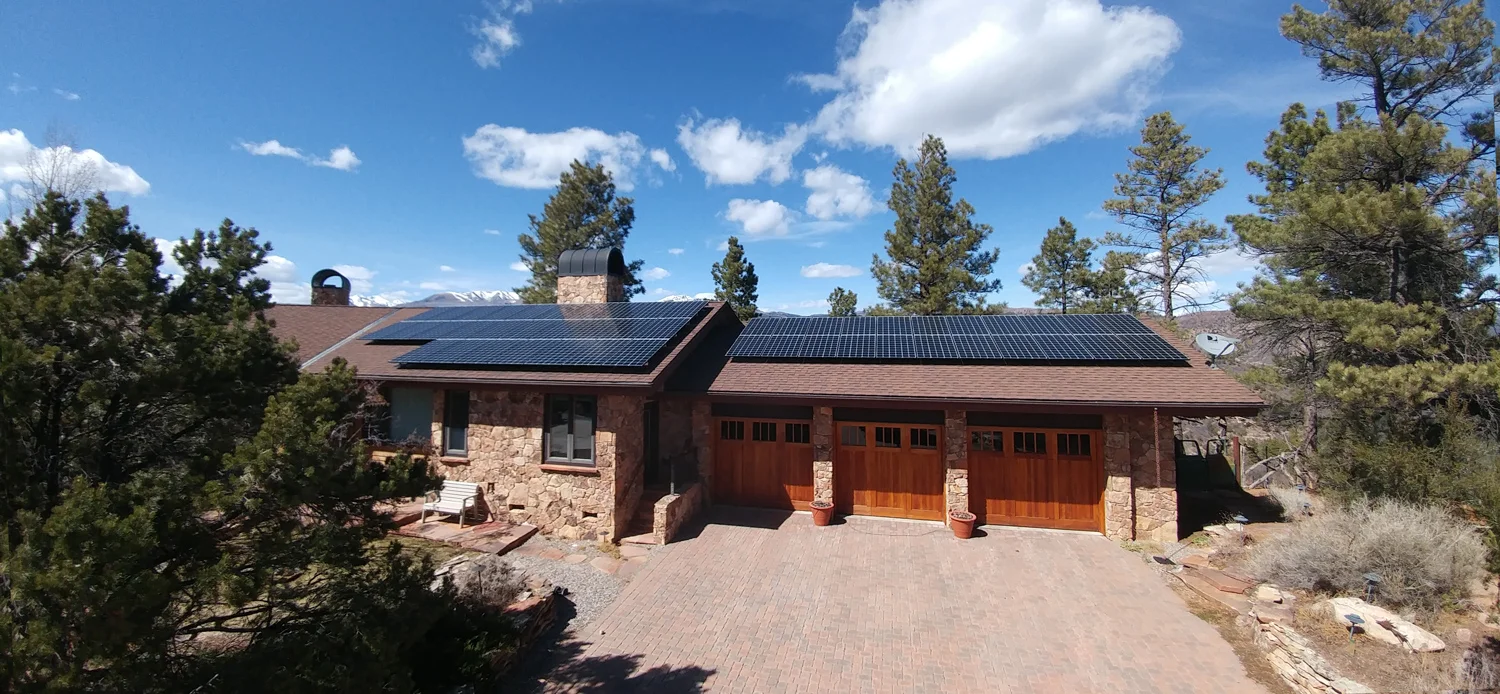
That depends on your energy consumption, which is why we’ll look at recent electric bills when designing your array. For reference though, a 5 kW (5,000 Watt) system, which is roughly 15 solar modules, meets the needs of an average home and costs around $17,000.
How much does solar cost?
It’s cheaper than you think! As mentioned above, an average home needs about 5 kW of solar (15 solar panels) which comes out to ~$17,000 net. We pride ourselves on staying current with the latest incentives and will make sure you know about them and have the necessary documentation to claim them.
How long will it take to reach payback?
Residential systems have a typical payback period of 7-8 years and commercial systems see 4-7 years. This means you save tens of thousands of dollars in energy savings over the next 25 years (the warranty length of the panels).
Do I need a battery? How do they work?
The standard grid-tied solar setup does not include a battery. The systems are connected to the utility grid which accepts any excess power and credits your account. So the energy isn’t lost. That being said, folks looking to power their home with solar at night (rather than the grid) or have back up power in the event of an outage do choose to add a battery for on-site storage. As well as folks looking to be completely off-grid. As the leading storage experts in our area, we’re happy to detail the best options for your needs and include that in your free proposal.
Is there any system maintenance required?
Not really, no. Solar is basically maintenance free. The only thing would be snow removal on the years where we see major back-to-back snowstorms and no sunshine. Otherwise our sunny skies usually melt the snow off the panels faster than the surrounding roof and you don’t have to worry about removing it.
How long will my solar system last?
Solar panels last a long, long time. The modules we install are industry-leading with a 25-year power warranty. Not bad considering the payback period on the system is roughly 8 years. For peace of mind, most systems have a free monitoring tool which allows you to track the health and performance of your system over time. In the end, we don’t know how long the panels will last, as the oldest terrestrial modules are over 45-years old and still going strong.
Can a homeowner sell power back to their utility?
Yes. Any excess electricity generated by the array will spin your meter backwards and credit your account by that exact amount of energy at the full price value. So that counts as “selling the energy back”. Then later, when you need that energy from the grid, you get it at no cost. It’s your power, you made it. The utility just hangs onto it for you. This process, known as net metering, happens all day everyday. If you have extra credits left over at the end of the year they’ll pay you for them - at the wholesale rate, not full price - and zero your credits out.
What happens when it snows?
Immediately after a snowstorm when your solar panels are covered, they won’t produce power. But because snow slides easily off solar panels and they are installed where there’s the most sun, the snow that covers your panels will melt first. This means your array will be exposed to light again relatively quickly, allowing them to produce electricity. The reflection off the white snow surrounding the panels may even increase how much power your system produces via the albedo effect. Here in Southwest Colorado, we engineer all our systems to support the snow loads expected in their given application.
Will solar increase my property value?
Yes. According to real estate appraisers, homes with solar sell for roughly 4% higher than comparable non-solar properties. This means that a home valued at $750,000 (median home price in SW Colorado as of September of 2026) would sell for an additional $30,000. That could pay for the original cost of the system!
WHAT IS AN ENERGY SERVICE AGREEMENT (ESA)?
An Energy Service Agreement (ESA) is a way to make going solar more affordable by providing up to 30% savings upfront. This solution allows available commercial solar tax incentives to work on your behalf. The result? You get the benefits of solar, and significant savings, without having to wait for a tax credit.
ESA - what makes this different than traditional solar leases?
Traditional solar leases require you to pay the lease off over time. There is also more drama if your house is sold during the lease period. This option allows you to take advantage of the Commercial Tax Credit and you get 100% of the energy savings starting day 1.
esa - why does animas impact have to own the system for 5 years?
This is an IRS requirement for claiming the Commercial Tax Credit. Don’t worry, you get all of the power the system generates the entire time. We will even monitor, maintain and repair the system if needed in these first five years. What a deal!
esa - What if i sell my home in the first five years?
No worries! We have two options for you.
Option 1 - Transfer to the buyer - The purchaser may assume the ESA.
Option 2 - Purchase Before Sale - This early purchase option will cost a bit more, coordinate with Shaw Solar early so we can make a plan.